
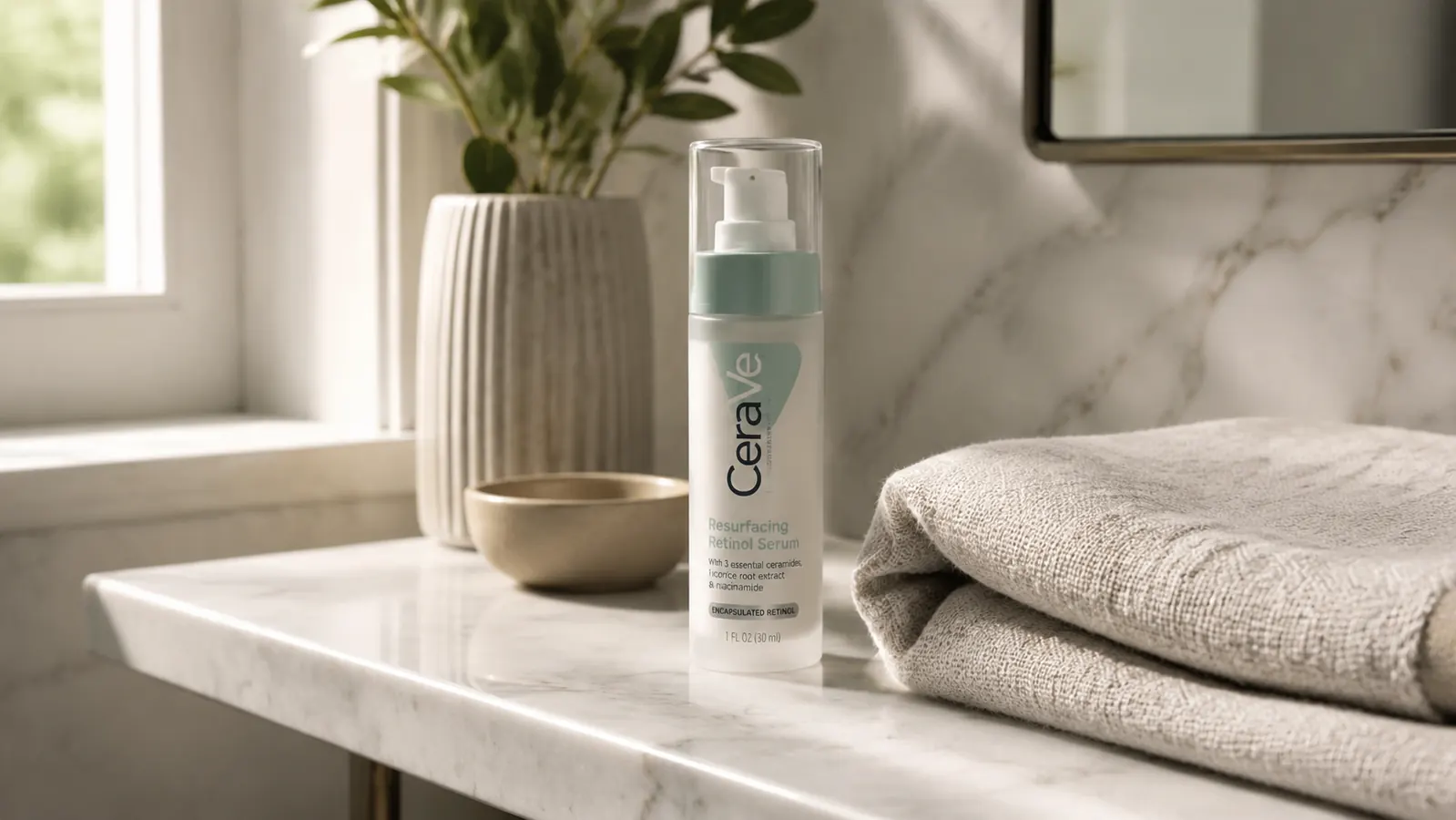
I want to be upfront with you: the CeraVe Resurfacing Retinol Serum has over 55,000 Amazon reviews and a 4.6-star average. That sounds like a slam dunk. But in three years of recommending retinol products to clients at my esthetics studio in Brooklyn, I have watched people buy this serum based on those numbers, have a rough first four weeks, and quit before they see results. That is not the serum's fault. It is a communication problem. The listing does not tell you what you actually need to know before you start.
This is not my long-term use breakdown. You can read that over in my 3-month CeraVe retinol review. This piece is specifically for people who are about to buy it and want the unfiltered picture first: what the encapsulated retinol formula can and cannot do, what a purge looks like versus real irritation, who plateaus with this and needs to move on, and the small but genuinely annoying dropper bottle problem nobody mentions in the five-star reviews.
The Quick Verdict
A reliable starter retinol with real supporting ingredients, but it is a gentle entry-level formula and not a powerhouse. You will eventually outgrow it.
Amazon Check Today's Price →Before you buy: check if it is still under $20 on Amazon
The price fluctuates. At its regular drugstore price point it is one of the best-value retinol serums available for beginners. Worth confirming before you pay more somewhere else.
Amazon Check Today's Price on Amazon →The Encapsulated Retinol Thing: What It Means for Your Results
CeraVe uses encapsulated retinol in this serum, which means the retinol molecules are wrapped in a time-release carrier that delivers them gradually to skin cells rather than all at once. This is a real technology and it does two useful things: it makes the formula gentler on sensitive skin, and it extends the shelf stability of the retinol so you are not burning through an oxidized product after three weeks. That is genuinely good.
Here is the honest limitation no one talks about. Because the delivery is slower and controlled, the actual retinol activity at the skin-cell level is lower than a comparable concentration of unencapsulated retinol. This serum contains 0.1% encapsulated retinol. That does not mean it is equivalent to 0.1% pure retinol, because the encapsulation reduces the delivered dose. For a true beginner who has never used retinol and has a sensitized or reactive skin barrier, that is the right choice. For someone who has been using retinol for a year or who has skin that tolerates it well, this formula will feel like very little is happening after month two or three.
Think of it this way: this is a 10-mph school zone, not a highway. The school zone is exactly right when you are learning to drive. It gets frustrating once you have your license and need to actually get somewhere. The serum does not advertise itself as a powerhouse, and that is to its credit. But you need to know going in that you are buying a starter retinol, not a prescription-grade cell-turnover engine.
Purging vs. Irritation: The Difference Matters a Lot Here
This is the section I wish existed when I was first learning to use retinol. Purging and irritation look similar but mean opposite things about whether you should continue. Getting them confused is the most common reason people quit a retinol formula that was actually working.
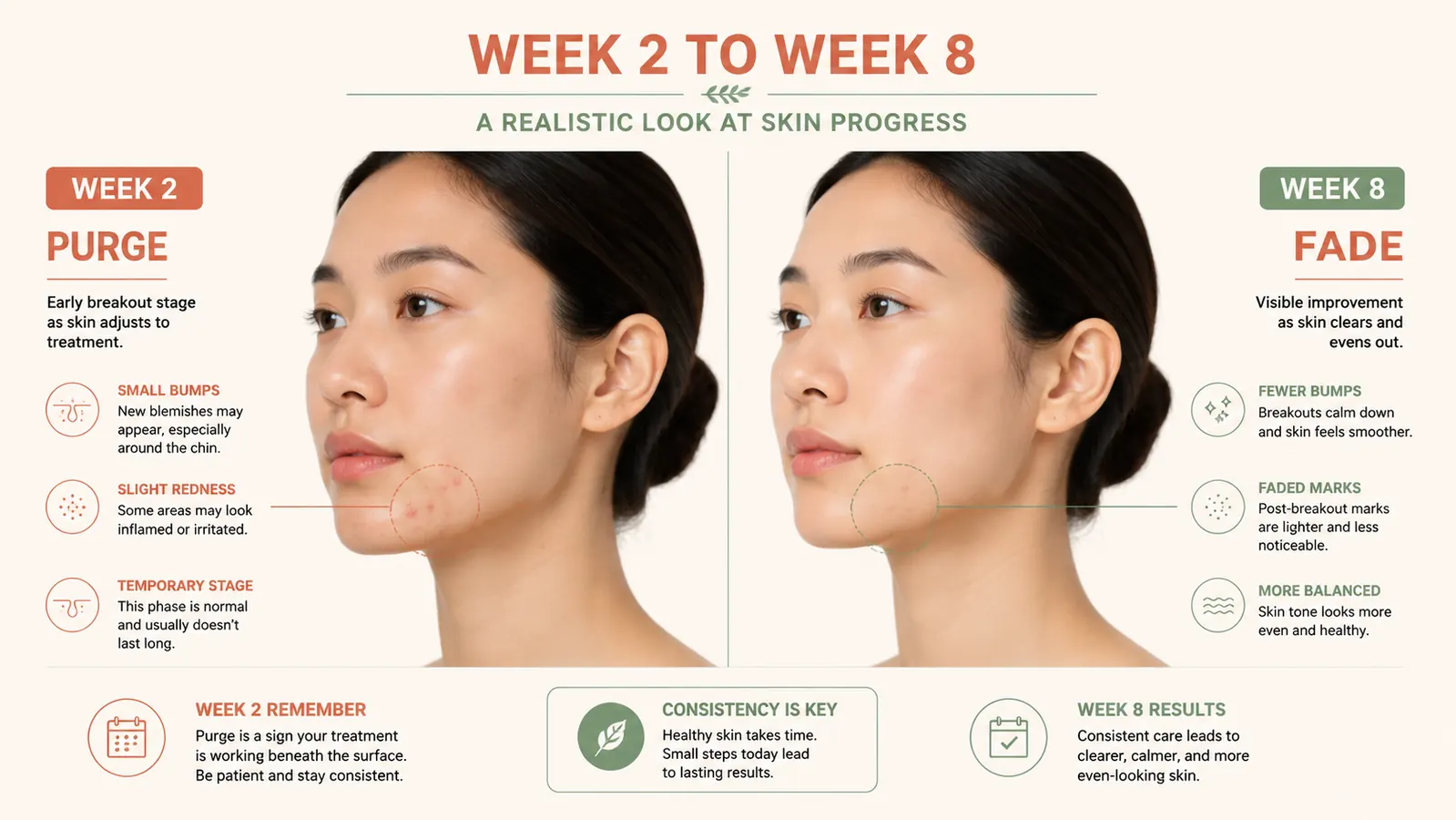
Purging happens because retinol speeds up your skin's cell turnover cycle. Congestion that was already forming under the surface gets pushed out faster than it would have on its own. The result is small breakouts, usually clustered around your chin, jawline, or forehead, that appear in weeks two through four and then resolve. These breakouts are not new damage. They are existing damage moving through your skin faster. Purging looks like small closed comedones or flesh-colored bumps, not inflamed cystic acne. It tends to stay in areas you already break out in, and it clears on its own around week six. If you have acne-prone skin, expect some version of this with the CeraVe serum.
Irritation is different. Irritation looks like redness, flaking at the cheeks or mouth corners, a tight stinging sensation, or a full-face sandpaper texture. It is a barrier problem, not a purging problem. Irritation means you are using too much product, too often, or applying it on top of other actives that are pushing your skin past its tolerance. If you see those symptoms, pull back: apply every third night instead of every other night, apply it over a thin layer of moisturizer to buffer, and skip any other actives on the same night. With this serum specifically, because the retinol is gentle to begin with, true irritation usually means something else in your routine is compounding the effect.
Purging is existing congestion moving out faster. Irritation is your barrier saying it has had enough. The CeraVe retinol serum rarely causes the second one on its own, but your other actives might be doing the damage.
What Licorice Root and Niacinamide Are Actually Doing in This Formula
The full product name is the CeraVe Resurfacing Retinol Serum for Post-Acne Marks, and the supporting ingredients matter a lot for understanding why it works on that specific concern. Licorice root extract is in here as a brightening agent. It inhibits the enzyme tyrosinase, which is responsible for producing melanin at the site of post-inflammatory hyperpigmentation. That pink or brown shadow that sticks around after a breakout clears is what licorice root is targeting. It is not as fast-acting as tranexamic acid or as aggressive as kojic acid, but it is genuinely effective over time and well-tolerated by most skin types. If you are using this serum for post-acne marks rather than fine lines or texture, licorice root is doing real work alongside the retinol.
Niacinamide is the ingredient you may already be using elsewhere. It is in a significant portion of CeraVe's product line, it is in Paula's Choice products, it is in The Ordinary products, and it is in a huge number of moisturizers and toners that acne-prone skin people gravitate toward. At concentrations around 5%, niacinamide helps minimize pore appearance, supports the skin barrier, and provides its own mild brightening effect on hyperpigmentation. In this serum it is doing useful work. But if you are also applying a separate niacinamide serum, a niacinamide moisturizer, and this product on the same face in the same routine, you are almost certainly over-layering. You do not need niacinamide from six different sources. Pick the one that matters most for your routine and simplify.
The Dropper Bottle Issue Nobody Mentions in the Five-Star Reviews
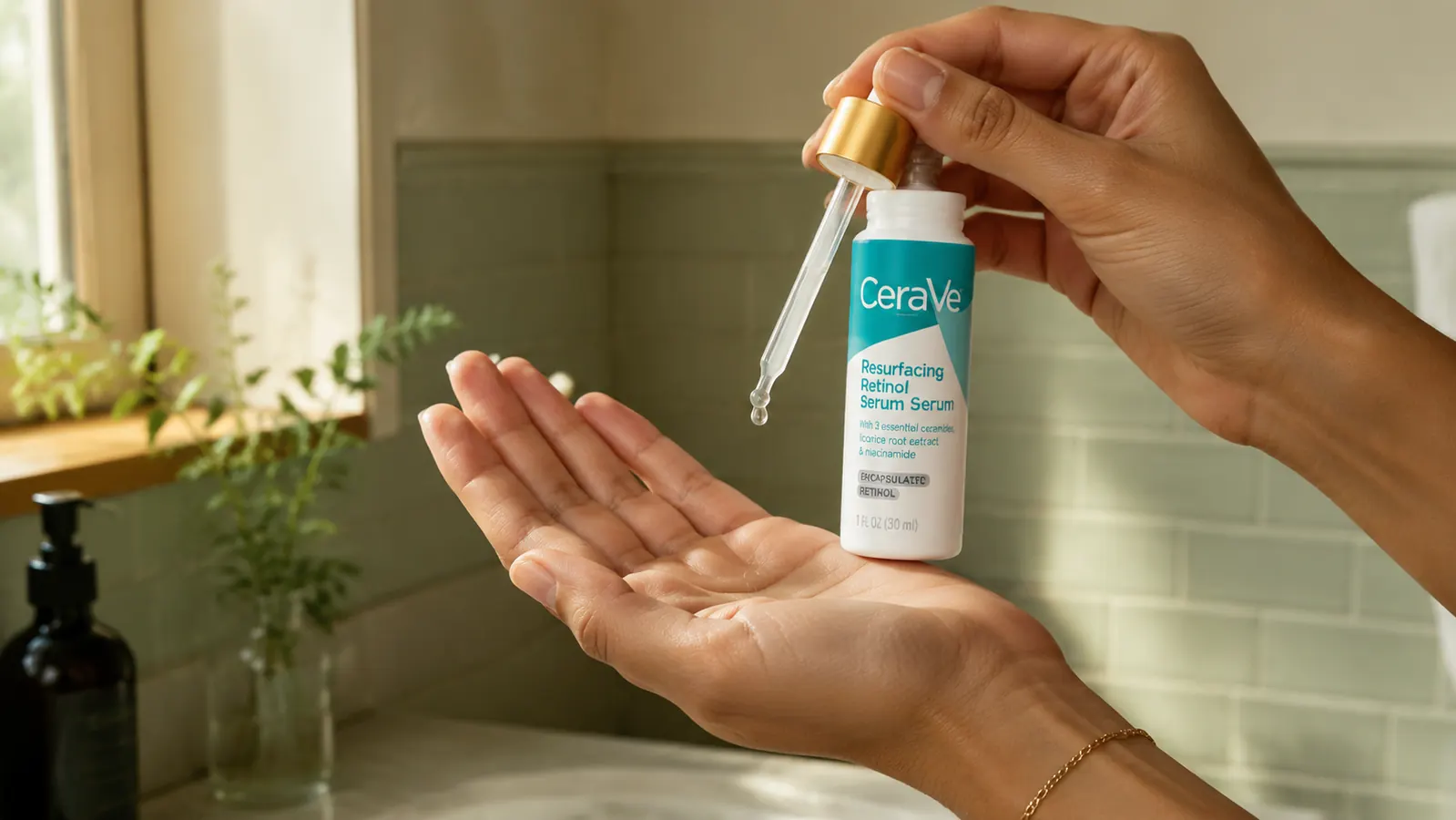
The CeraVe Resurfacing Retinol Serum comes in a small frosted glass-look bottle with a rubber dropper pipette. It looks nice on a shelf. The functionality is annoying in practice.
The dropper does not draw up a precise amount. You squeeze, and what comes out is somewhere between nothing, a few drops, and half a pipette depending on how firmly you squeeze and how much product is left in the bottle. In the first two weeks, when you are still learning how little of this product you actually need (the size of a pea for your whole face, no more), inconsistent dosing leads to over-applying without realizing it. Over-applying a retinol is how people get the barrier irritation I described above, especially if they are also using other actives. I have had clients report using twice the necessary amount every night for a week before figuring out the dropper.
The fix is simple: dispense onto your fingertip first and visually confirm you have a pea-sized amount before applying. Do not try to dose straight from dropper to face. The serum itself is a good formula. The delivery mechanism is just clunky. It is worth knowing before you open the bottle.
Who Will Get Real Results and Who Will Plateau
After three to four months of consistent use, every other night, applied to clean dry skin and followed by moisturizer, most people with mild post-acne marks and early fine lines will see measurable improvement. Skin texture tends to smooth out first, usually visible around week five or six. Post-acne marks fade gradually over months two, three, and four. The results are real. They are just incremental, not dramatic.
The people who plateau are usually those with deeper textural concerns, moderate to significant acne scarring (not just surface hyperpigmentation), or skin that genuinely tolerates retinol without sensitizing. If you have been using this serum for four months and feel like nothing more is happening, that is not a failure of the product. That is the product having done what it can at its strength, and you being ready for the next step up. Adapalene 0.1% gel (Differin), a prescription-strength retinol, or a 0.3% to 0.5% non-encapsulated retinol product would be a logical next move. I have a full comparison of the CeraVe serum and Differin in my retinol vs. adapalene guide if that is where you are headed.
What I Liked
- Genuinely gentle introduction to retinol, with low irritation risk for beginners and reactive skin types
- Licorice root extract adds real brightening support specifically for post-acne marks and hyperpigmentation
- Ceramide base formula supports the skin barrier while retinol accelerates turnover, which reduces net dryness
- Drugstore pricing makes it accessible and a very low-stakes first retinol trial
- Fragrance-free and formulated without parabens, suitable for sensitized or post-procedure skin
- The encapsulated delivery means less oxidation, longer shelf life, and less peak-concentration irritation
Where It Falls Short
- Encapsulated retinol delivers lower active concentration than the percentage implies, so it is a starter formula and not a workhorse
- Dropper applicator dispenses inconsistent amounts, which leads to accidental over-application for new users
- Not suitable as a standalone solution for moderate or deep acne scarring, as it addresses surface hyperpigmentation and not indented scars
- If your routine already contains multiple niacinamide products, adding this creates redundant layering
- Most people outgrow the formula by month four to six and will need to step up to a higher-strength option
- Purging in weeks two through four is common and can feel alarming, but the product does not prepare you for this

Sensitive Skin Caveats: Who Should Approach This Carefully
The gentle formulation makes this one of the better first retinols for sensitive skin types. But 'gentle' is not 'zero reaction possible.' If you have an actively compromised barrier, meaning you are coming off a bad chemical exfoliant experience, you had a procedure done recently, or you have a condition like rosacea or perioral dermatitis, pause retinol entirely until your skin is stable. Retinol speeds up turnover, which is exactly the opposite of what a compromised barrier needs.
People with dry or tight skin types should plan to apply this over a thin layer of moisturizer rather than on bare skin. The buffer approach reduces the delivered retinol slightly but dramatically reduces the tight, flaky feeling that dry skin types often experience in the first month. It is not cheating. It is smart. You still get the results; you just get them with less discomfort. Apply your moisturizer, wait two minutes for it to absorb, then apply the retinol serum on top.
One more thing on sensitive skin: do not pair this serum with exfoliating acids on the same night. Not glycolic, not lactic, not AHA toner, not BHA. Retinol plus acid on the same evening creates more active delivery than most sensitive skin types can handle. Alternate nights. Retinol on night one, acid exfoliant on night two or three. Keep it simple.
Who This Is For
This serum is the right choice if you are new to retinol and nervous about irritation. It is right for someone with mild to moderate post-acne marks who wants to fade them over three to four months at a reasonable price. It works for anyone who has tried stronger retinol products and found they could not tolerate them. It is a good fit for routine minimalists who want one serum doing multiple jobs: light resurfacing, brightening, and barrier-friendly delivery in one step. If that is you, it earns its shelf space.
Who Should Skip It
Skip this if you have been using retinol for over a year and want more visible results than you are currently getting. Skip it if your concern is indented acne scarring rather than surface hyperpigmentation, since a retinol serum at this strength will not address that. Skip it if your skin is already irritated or barrier-compromised. Skip it if you are pregnant or breastfeeding, and skip all retinol products until you are done with both. And skip it if the idea of a purge period scares you into quitting at week three, because that is the exact moment the product starts working. You will read the stories of people who quit too early in the one-star reviews. Do not be that review. If you want more context on whether to start here or with Differin, my CeraVe retinol story walks through the decision I made for my own post-acne skin.
Still the most forgiving way to start retinol at a drugstore price
If you are a retinol beginner with acne-prone or post-breakout skin, this serum is one of the most accessible starting points available. Check the current price before you buy at a retailer that might charge more.
Amazon Check Today's Price on Amazon →