

If you have been staring at a cluster of post-acne marks for months, you already know how frustrating they are. The breakout cleared. The inflammation is gone. But the flat, brownish discoloration stays behind and nothing in your current routine seems to touch it. That discoloration is called post-inflammatory hyperpigmentation, or PIH, and it is caused by excess melanin that your skin produced in response to the inflammation. The good news is that retinol addresses PIH through several overlapping mechanisms, which is why a consistent retinol serum is one of the most useful tools you can add to a mark-fading routine. Here is exactly what it does.
Still dealing with marks from breakouts that cleared weeks ago? This is the serum Lena recommends for post-acne PIH.
CeraVe Resurfacing Retinol Serum pairs encapsulated retinol with niacinamide, licorice root, and three ceramides. It is designed specifically for post-acne marks, not just general antiaging. Over 55,000 Amazon reviewers and counting.
Amazon Check Today's Price on Amazon →10 Ways Retinol Works on Post-Acne Marks
It Speeds Up Cell Turnover
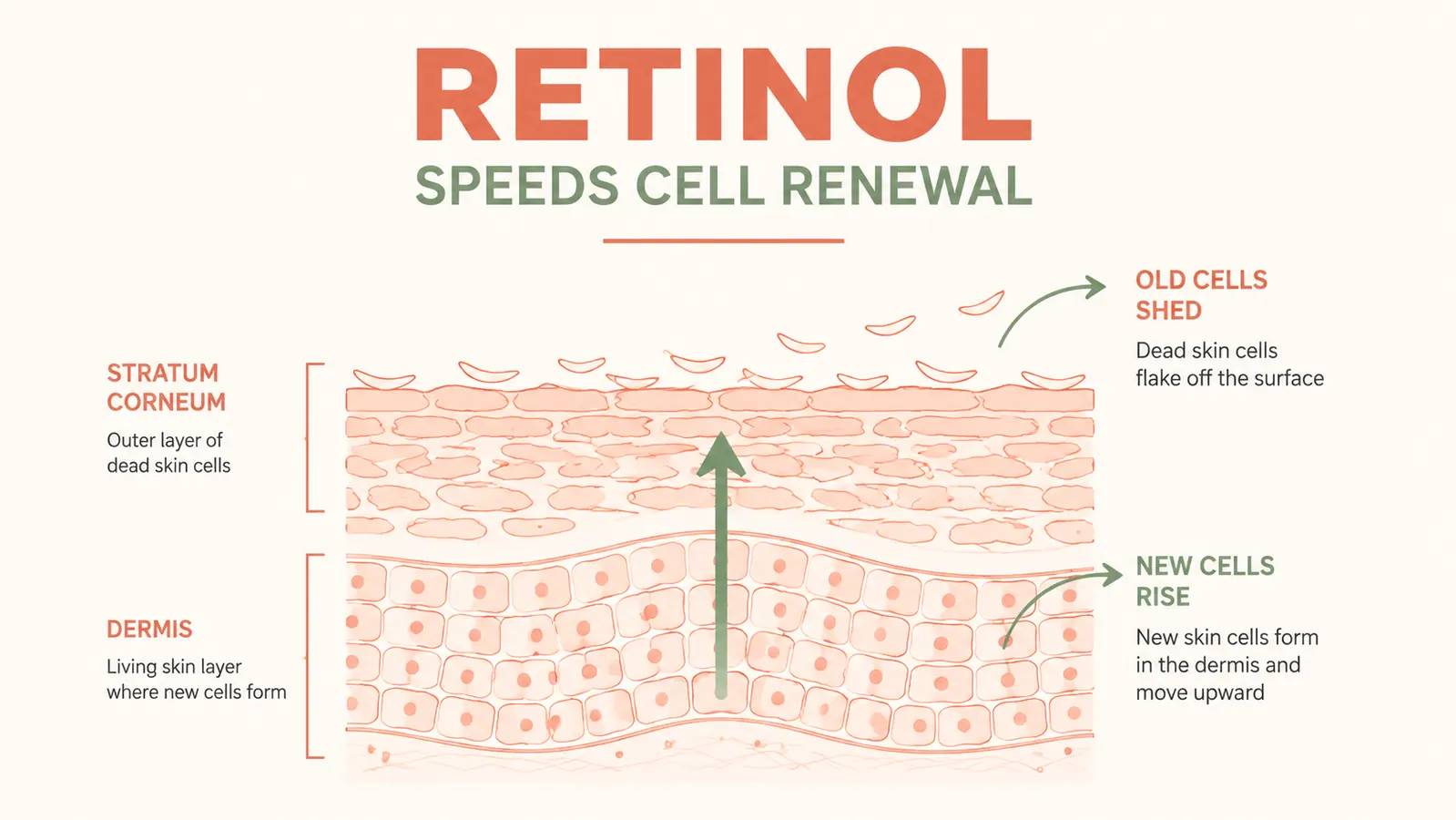
Retinol is a vitamin A derivative that binds to retinoic acid receptors in skin cells, accelerating the rate at which your skin produces and sheds cells. The average cell turnover cycle in an adult is around 28 to 40 days, and it slows further with age. Retinol can shorten that cycle meaningfully, pushing pigmented, post-inflammatory cells to the surface faster so they can be shed. This is the most fundamental way retinol addresses marks: it literally brings the discolored cells to the surface and replaces them with fresher ones underneath. You are not bleaching the skin; you are rolling it forward.
It Helps Prevent New Breakouts From Forming
One of the more underappreciated things retinol does is prevent future acne. It regulates sebum production and promotes smoother cell shedding inside the pore lining, which reduces the clogged follicles that lead to new inflammatory breakouts. If your marks are being outpaced by new breakouts that produce more marks, you are essentially running in place. Getting the breakout cycle under control is a prerequisite for real fading progress. Retinol attacks both sides of that problem: it addresses the existing marks and reduces the source of new ones.
It Fades Post-Inflammatory Hyperpigmentation Directly
PIH forms when melanocytes, the cells that produce pigment, go into overdrive during a healing response. Retinol has been shown in clinical literature to reduce melanin transfer within the skin and mildly interrupt the signaling that tells melanocytes to keep producing pigment. The effect is not as aggressive as a dedicated brightening agent like azelaic acid or tranexamic acid, but it is consistent, and it stacks well with those ingredients. Over an eight to twelve week period, you should see shallow brown marks lighten noticeably with nightly retinol use.
Paired Niacinamide Reduces Residual Redness
The CeraVe Resurfacing Retinol Serum includes niacinamide (vitamin B3), and that pairing matters for mark fading. Niacinamide reduces the transfer of melanosomes from melanocytes to keratinocytes, which is the physical step where color gets deposited into the top layer of skin. It also calms inflammation and strengthens the barrier, which reduces the reddish, irritated appearance of newer marks. Where retinol focuses on turnover and collagen, niacinamide focuses on tone. The two work on different pathways, so having both in one bottle speeds the overall process.
Licorice Root Extract Brightens Unevenly Toned Areas
Licorice root contains glabridin, a compound that inhibits tyrosinase, the enzyme responsible for melanin synthesis. In plain terms: it slows down your skin's ability to deposit new pigment in reactive areas. This makes it particularly helpful in the weeks right after a breakout heals, when your skin is still in a mildly inflammatory state and prone to depositing more pigment than usual. Licorice root is gentle enough for daily use and does not carry the sensitization risk of some stronger brighteners. It rounds out the mark-fighting action in this formula without adding irritation.
Ceramides Protect Your Barrier While the Retinol Works
Retinol can be drying and disruptive, especially in the first few weeks of use. A compromised skin barrier creates more inflammation, which leads to more hyperpigmentation, which defeats the whole purpose. The three ceramides in this serum (ceramide NP, ceramide AP, ceramide EOP) reinforce the lipid matrix that holds your skin barrier together, reducing transepidermal water loss and keeping sensitivity in check. This is why CeraVe's retinol feels different from budget options that skip barrier ingredients: it is trying to make the retinol process sustainable, not just effective in the short term.
Encapsulated Delivery Makes It Gentler on Sensitive Skin
Standard retinol can cause significant irritation, particularly on sensitized or acne-prone skin that is already dealing with an impaired barrier. This formula uses encapsulated retinol technology, where the retinol is enclosed in a protective shell that releases gradually as the capsule breaks down on the skin's surface. The slower release means the active hits the skin at a lower peak concentration, which dramatically reduces the risk of peeling, redness, and dryness. For anyone who has tried retinol before and quit because of irritation, encapsulated formulas are usually the right re-entry point.
It Stimulates Collagen to Smooth Textural Marks
Not all post-acne marks are purely pigment-based. Some have a subtle textural component: slight indentations, rough patches, or uneven surface quality. Retinol stimulates fibroblast activity in the dermis, which increases collagen and elastin production over time. This will not fill in deep icepick scars, but for shallow rolling texture, it makes a real difference across three to six months of consistent use. The collagen boost also improves overall skin resilience, making it less likely to scar visibly from future breakouts.
Thinning the Stratum Corneum Makes Marks Less Visible
The stratum corneum is the outermost layer of the skin, made up of dead, flattened cells. When it is thickened and compacted, pigmented marks sit deeper and appear more pronounced under the surface. Retinol gradually thins the stratum corneum by promoting healthy cell shedding. A thinner, more uniform stratum corneum reflects light more evenly, which makes the skin appear more even-toned overall. This effect is separate from actual melanin reduction but contributes significantly to the visual improvement most people notice after four to six weeks of use.
It Plays Well With Most Actives in Your Routine
One practical advantage of a moderate-strength retinol like this one is that it is compatible with most supporting actives you might already be using. It layers well with niacinamide (already in the formula), vitamin C in the morning, and barrier-supporting moisturizers at night. The main thing to avoid using on the same night is a low-pH exfoliating acid like glycolic or lactic, since the combination can increase irritation significantly. Beyond that, you have a lot of flexibility. A retinol that fits into your existing routine without forcing a complete overhaul is far more likely to get used consistently, and consistency is where all of the fading actually happens. For a full guide on pairing and frequency, see our article on how to start retinol without irritation.
Retinol does not bleach marks away. It creates the conditions where your skin can naturally resurface and replace pigmented cells with cleaner ones. Give it eight weeks before you judge it.
A few things worth noting before you start. Retinol makes your skin more sensitive to UV damage, so daily SPF is not optional when you are using it consistently. Skipping sunscreen while on retinol is the fastest way to undo the fading progress you are making. Start with two to three nights per week for the first month, then build to nightly use once your skin adjusts. If you are new to retinol, it is also worth reading our full guide on the cerave-retinol-serum-long-term-review to understand what the adjustment period looks like week by week.
Ready to start fading those marks? CeraVe's retinol was built specifically for post-acne PIH.
With encapsulated retinol for gentler delivery, niacinamide to even tone, licorice root to brighten, and three ceramides to protect your barrier, this is one of the most complete drugstore options available for post-acne hyperpigmentation. Consistently rated 4.6 stars across more than 55,000 Amazon reviews.
Amazon Check Today's Price on Amazon →