
This is the story of how the CeraVe Resurfacing Retinol Serum quietly became the only active I trust on my face after a stressful season of breakouts. Last spring I had a deadline that stretched two months past what was reasonable. I was working late, sleeping badly, and wearing a cloth mask through twelve-hour shifts. By the time the project wrapped I had the clearest calendar I'd had in a year and a face that told the whole story. Five or six inflamed breakouts had come and gone along my jawline and left behind marks that my skin just refused to let go of: flat, reddish-brown patches that sat there like a record of every bad week I'd had.
I'm a licensed esthetician. I know how post-inflammatory hyperpigmentation works, I know it fades on its own over time, and I know that stress and occlusion from masks are a documented recipe for it. None of that made the marks feel less frustrating when I was the one looking at them in the mirror at 6 a.m. So I did what I tell clients not to do: I reached for the strongest thing I had on hand.
First was Differin, the 0.1% adapalene gel that I'd been recommending to clients with active acne. My skin is combination-sensitive, and I'd never used it on myself. Within ten days I had dry, flaky patches across both cheeks and a general feeling that my face was angry about something. I backed off, gave my barrier two weeks to settle, and tried prescription tretinoin 0.025% that I'd received from my dermatologist the previous year and never opened. That lasted eight days. The tretinoin worked fast but the redness, the peeling, and the stinging on any patch of skin that was even slightly dehydrated was too much. I wasn't going to get anywhere by irritating a barrier that was already beaten down from months of stress.
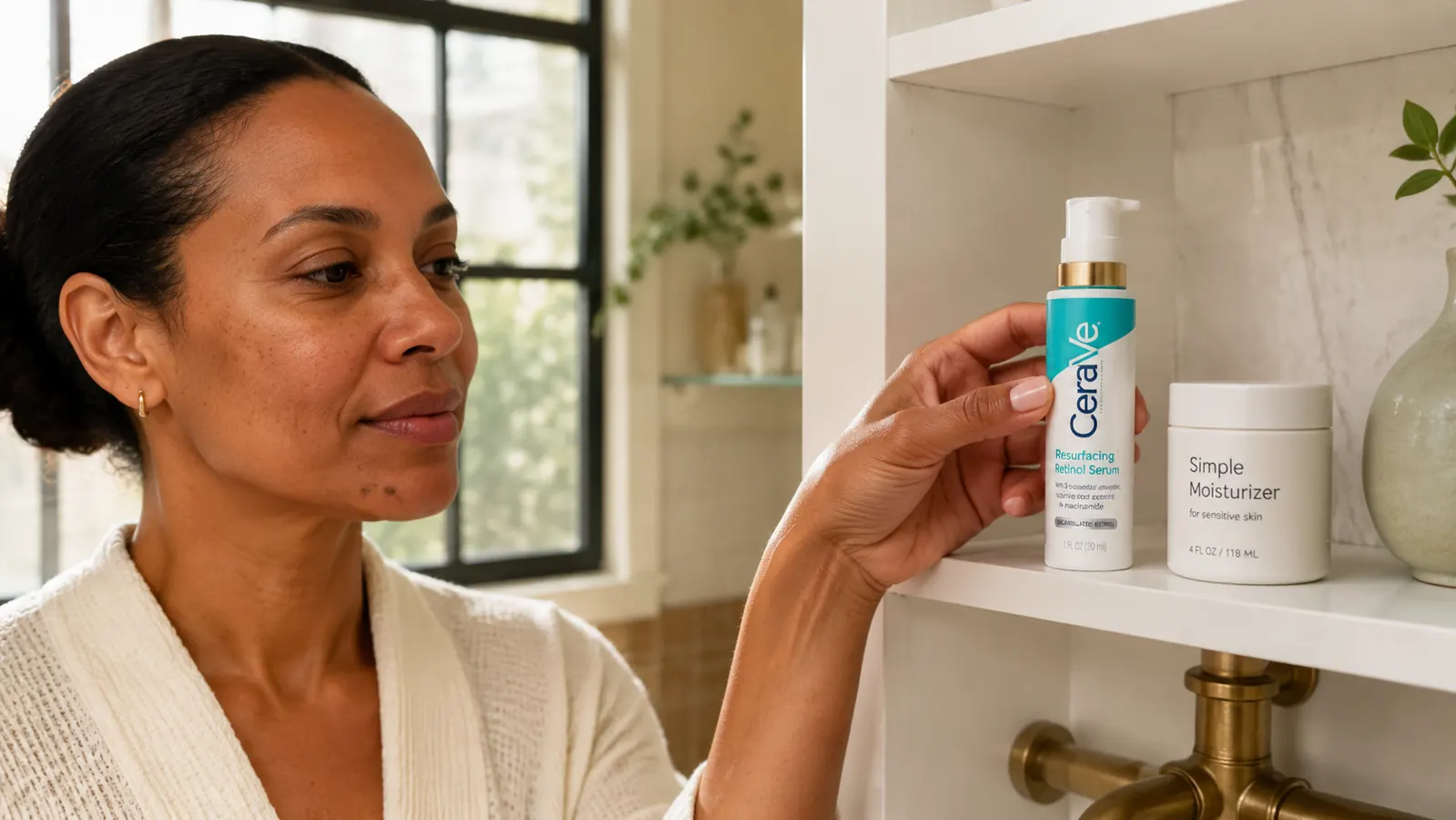
I complained about this on a private esthetician forum I've been on for a few years. Someone I respect posted back within an hour: have you tried the CeraVe Resurfacing Retinol? She made a specific point: it uses encapsulated retinol, which releases more slowly than the retinaldehyde or tretinoin forms, and it pairs the retinol with niacinamide and licorice root, which are both known to support an even skin tone. It was formulated specifically with post-acne marks in mind, not just wrinkles. And it was under twenty dollars. I ordered it that evening.
I wasn't going to get anywhere by irritating a barrier that was already beaten down. I needed something the formula had already done the thinking for.
What the First Six Weeks Actually Looked Like
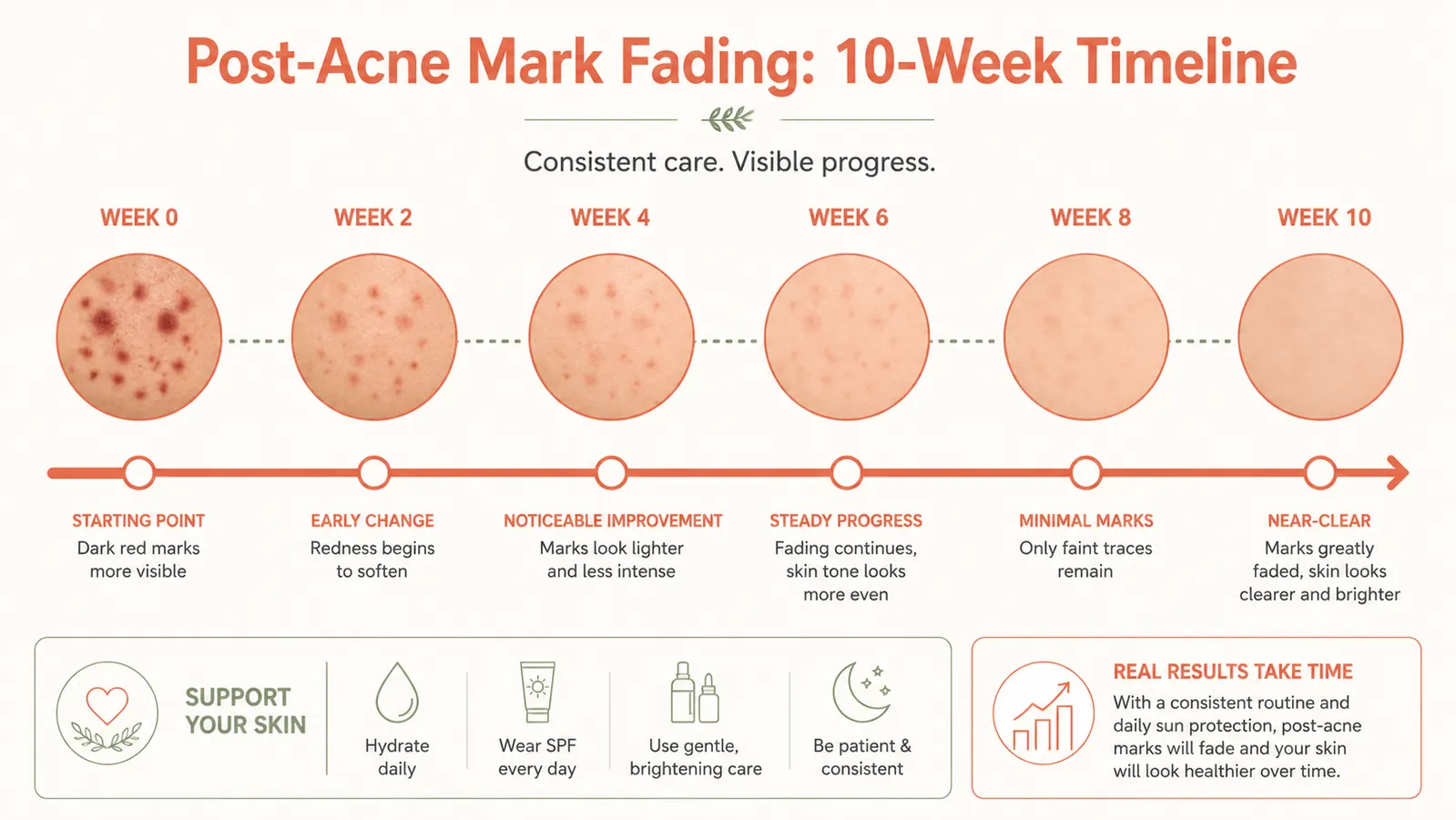
I started with two nights a week, applied after cleansing and toning, under my moisturizer. No irritation in week one, which told me the encapsulation was doing its job. I moved to every other night at week three with no issues. By week five I was using it five nights out of seven. My skin didn't peel. It didn't get rashy. There was a brief period around weeks three and four where two small spots that had been almost invisible became slightly more prominent before fading. That's normal retinol behavior and worth knowing about if you haven't used it before. I've written more about managing that process in my guide to starting retinol without irritation, if you want to go deeper on it.
The marks themselves started to visibly lighten around week six. Not gone, but noticeably lighter, and the texture around them had smoothed out in a way I noticed when I ran my fingers across my jaw. By week ten, four of the five marks were at maybe twenty percent of where they started. One stubborn one on my left jawline was still visible but lighter. I credit the niacinamide as much as the retinol for the speed of the tone correction. The two ingredients work on different pathways toward the same result, and formulating them together was a smart call.
The Formula Details Worth Knowing
The texture is a lightweight serum, not a cream or a gel. It absorbs within about thirty seconds and doesn't leave a film. I layered it under a simple ceramide moisturizer every night with no issues. The scent is nearly nothing. It comes in a pump, which I prefer over a dropper for retinol formulas because you get a consistent dose and less oxidation risk. CeraVe added their three essential ceramides to the formula, which matters for anyone whose skin is already compromised. It is not going to strip your barrier while it resurfaces. That was the thing the prescription tret did not account for.
A few practical notes: this is a nighttime-only product, and SPF in the morning is non-negotiable when you're using any retinol. I also would not layer this with a vitamin C serum or a strong AHA on the same night. Keep it simple on the nights you use it. Cleanser, toner if you use one, this serum, moisturizer, done.
What I'd Tell You If We Were Sitting at My Kitchen Table
If you're dealing with post-acne marks and you're tempted to go straight for prescription retinoids or strong actives, I get it. I did the same thing. But the irritation you create in the process can set you back further than waiting would have. The CeraVe Resurfacing Retinol is not the most potent option on the market, and that's the point. It is a formula designed to stay in your routine without blowing up your barrier. Most people's marks will respond to it if you're patient and consistent. Ten weeks felt long in the middle of it, and short in retrospect.
I still use it three nights a week as part of my regular rotation. Not chasing marks anymore. Just maintaining the turnover. At this price, I keep a backup bottle on hand. That says more than any before-and-after photo.
Still dealing with post-acne marks after trying stronger options? This is the one I'd start with.
CeraVe Resurfacing Retinol Serum pairs encapsulated retinol with niacinamide and licorice root to target post-acne marks without destroying your barrier. Over 55,000 Amazon reviews. Under $20. Formulated by dermatologists with ceramides included. If you've had a rough experience with stronger retinoids, this is the version worth trying first.
Amazon Check Today's Price on Amazon →