
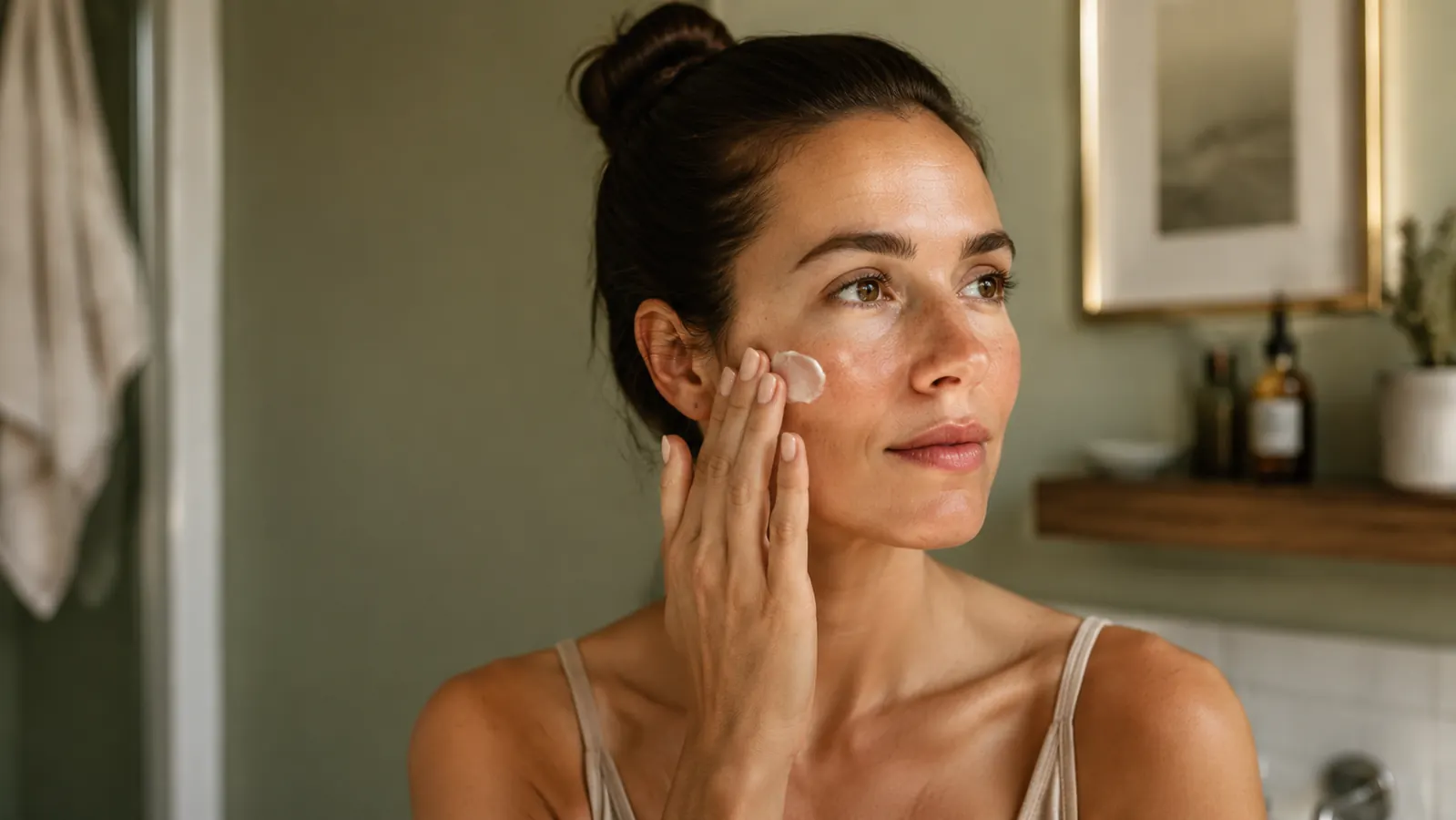
A client came to me last year after she had been through three months of what she called aggressive skincare. Glycolic acid every night, a high-percentage retinol two nights a week, a strong niacinamide serum in the morning, and a physical scrub on Sundays. Her skin looked irritated, felt perpetually tight, and had started breaking out in places it never had before. She had spent close to $300 on new products trying to fix it and made things worse each time. When I assessed her skin, the problem was not what she was using. It was that her barrier was completely overwhelmed and had lost the ability to protect itself. I put her on a stripped-down repair protocol built around La Roche-Posay Toleriane Double Repair moisturizer and almost nothing else. Three weeks later, her skin was calm again.
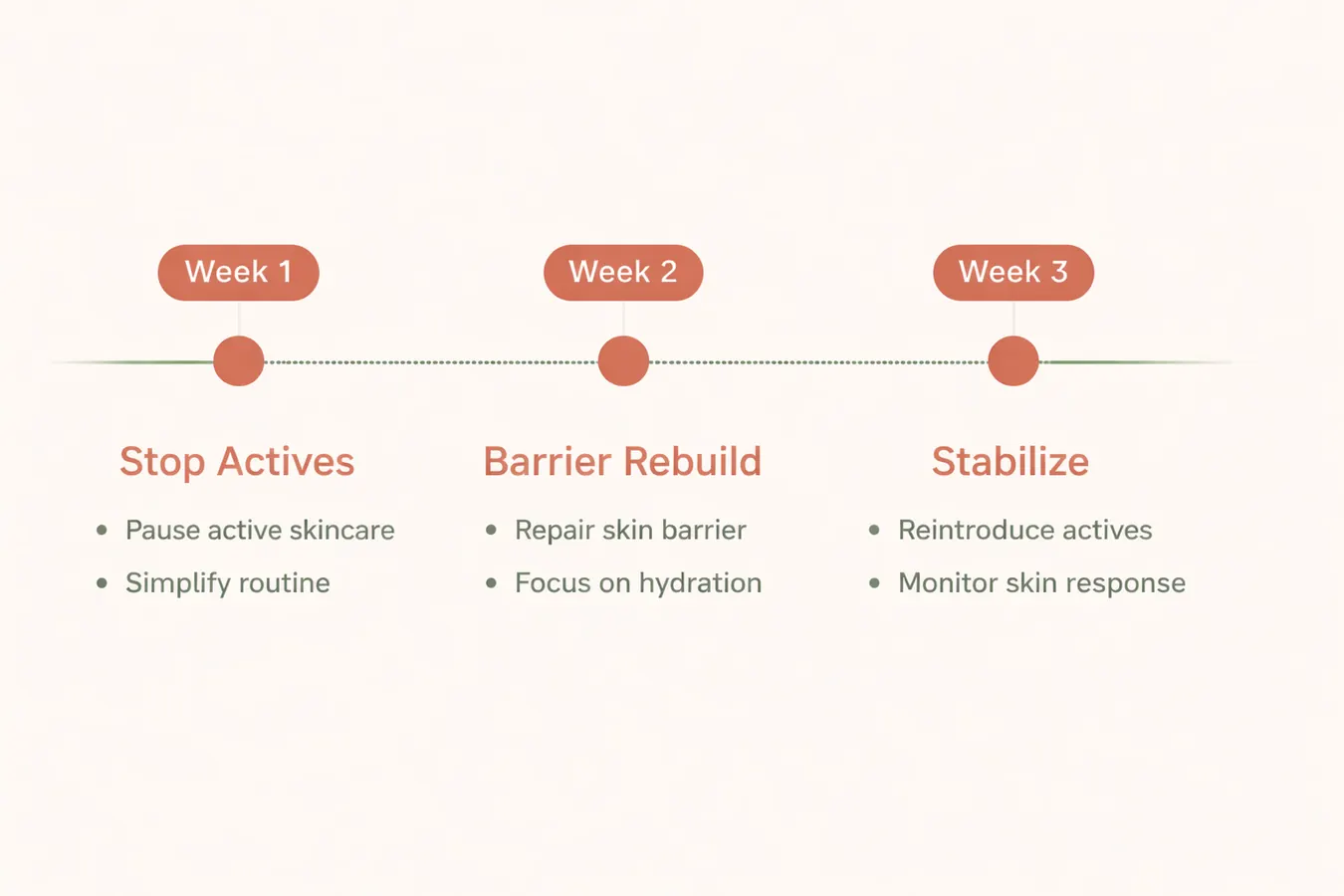
Skin barrier damage is more common than most people realize, and it is usually self-inflicted through enthusiasm rather than neglect. If your skin feels tight right after washing, if products that used to feel fine now sting or burn on application, if you are moisturizing twice a day and still look dehydrated, or if you are getting breakouts in new locations, your barrier is probably the issue. The good news is that it is entirely repairable. The protocol I use with clients takes about 21 days and requires doing less than you think, not more.
Your barrier cannot heal while it is still under daily attack. This ceramide moisturizer is the one tool that actually moves the needle.
La Roche-Posay Toleriane Double Repair Face Moisturizer has ceramides, niacinamide, and a prebiotic formula designed specifically to restore a compromised barrier. It is fragrance-free, gentle enough for post-procedure skin, and rated 4.6 stars across nearly 50,000 Amazon reviews. It is the only moisturizer I recommend during active barrier repair.
Amazon Check Today's Price on Amazon →What a Damaged Skin Barrier Actually Feels Like
Your skin barrier, technically called the stratum corneum, is the outermost layer of your skin. Think of it as a brick wall where the skin cells are bricks and the lipids, ceramides, and fatty acids between them are the mortar. When the mortar erodes, the wall lets things in that should stay out, including allergens, bacteria, and irritants, and lets things out that should stay in, primarily water. The clinical term for that water loss is transepidermal water loss, or TEWL, and high TEWL is the defining feature of a compromised barrier.
Barrier damage has a recognizable set of symptoms. Tightness right after washing, even when you use a gentle cleanser, is often the first sign. Stinging or a prickling sensation when you apply any product, including serums or moisturizers that you have used for months without issue, is a strong signal. Skin that looks dull and dehydrated despite consistent moisturizing, patches of unexpected redness or mild flaking, and new breakouts in areas where you do not normally break out are all consistent with barrier disruption. Some people also notice that their skin feels rough or uneven in texture even though they have been exfoliating, which is counterintuitive but makes sense once you understand that removing more dead cells will not help a barrier that is already depleted.
What Causes Barrier Damage
Over-exfoliation is the leading cause. This includes chemical exfoliants like AHAs, BHAs, and PHAs used too frequently, physical scrubs that create micro-tears, and retinoids or retinol used at too high a concentration or too often before the skin has adapted. Many people use exfoliants every night because they assume more is better, but the barrier only rebuilds during rest periods. If you are exfoliating every 24 hours, you are not giving it time to recover.
Hot showers are underestimated as a cause. Heat strips the lipid layer from your skin surface in the same way dish soap cuts through grease. A ten-minute hot shower can temporarily disrupt your barrier, and if you follow that with a foaming cleanser and an active, the cumulative effect adds up across weeks and months. Harsh weather, particularly low humidity in winter or wind exposure, pulls moisture from the skin and wears down the lipid layer over time. Fragrance in skincare products, both synthetic and natural, is a common hidden irritant. Fragrance molecules are small enough to penetrate the epidermis and trigger inflammatory responses in sensitized skin. Alcohol-heavy toners, typically those marketed as toning or balancing products that feel bracing and evaporate fast, are dehydrating at the barrier level and should be off the routine entirely during a repair phase.
Step 1: Stop All Actives for Two Full Weeks
This is the hardest step for people who love their routines, and it is non-negotiable. A damaged barrier cannot benefit from retinol, exfoliating acids, vitamin C, or even niacinamide concentrations above 10 percent. These ingredients require an intact barrier to function correctly, and using them on compromised skin increases irritation while providing none of the benefit. Pull everything except a gentle cleanser and a moisturizer for a minimum of 14 days. I know that feels like regression. It is not. You cannot build on a broken foundation.
What counts as an active you need to stop: any retinoid or retinol product, any AHA or BHA exfoliant (glycolic, lactic, salicylic, mandelic), benzoyl peroxide, high-percentage vitamin C serums (anything above 10 percent L-ascorbic acid), and any product labeled as a resurfacing treatment or exfoliating toner. If you are unsure whether something counts, the rule is simple: if it ever caused tingling, warmth, or peeling when your skin was healthy, it is an active. Set it aside.
Step 2: Switch to a Fragrance-Free, Gentle Cleanser
Your cleanser does more barrier damage than most people think, because it is the one product you use every single day, often twice, and rinse off before any moisturizer can compensate for what it stripped. During barrier repair, switch to the most boring, minimal cleanser you can find. Fragrance-free, no sulfates, no alcohol, no toning or brightening additives. A micellar water or a low-lather cream cleanser are both appropriate. You want something that removes makeup, sunscreen, and daily pollutants without stripping the minimal lipid layer your barrier is trying to rebuild.
Water temperature matters here. Rinse with lukewarm water, not hot. Pat dry with a clean cloth rather than rubbing. If your skin stings even after this minimal cleanse, apply your moisturizer within 60 seconds of patting dry, while your skin is still slightly damp. That window of dampness allows your moisturizer to seal in extra water before evaporation starts.
Step 3: Apply the Right Ceramide Moisturizer Two to Three Times Daily
This is where the rebuild actually happens. Ceramides are lipids that your skin produces naturally and that make up a significant portion of that mortar holding your barrier together. When your barrier is compromised, your ceramide levels are depleted. Applying a ceramide-rich moisturizer does not instantly reverse that depletion, but it provides the raw materials your skin needs to start rebuilding the lipid matrix, and it reduces TEWL in the meantime so the repair can happen in a better environment.
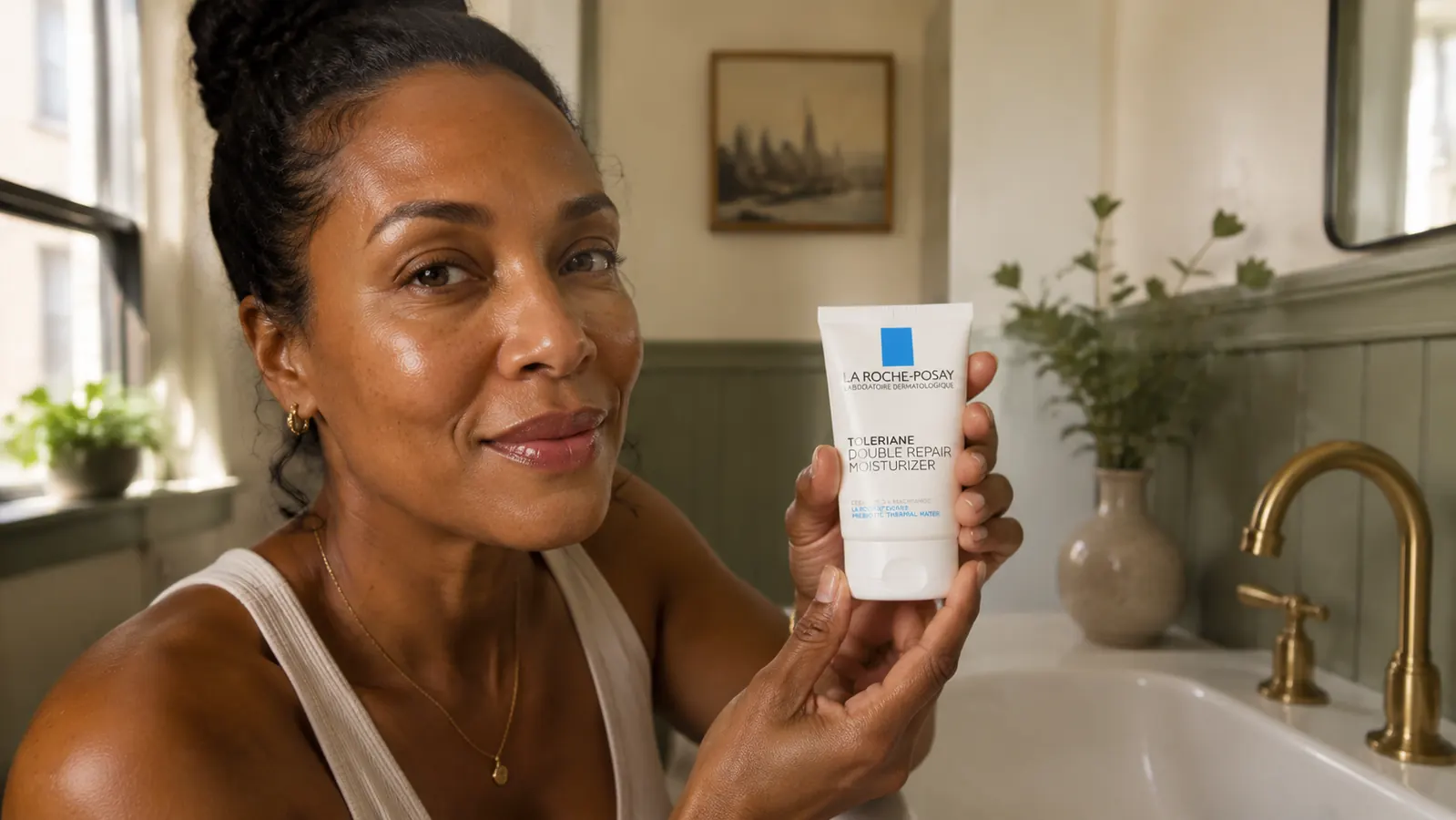
The moisturizer I reach for during every barrier repair protocol I supervise is La Roche-Posay Toleriane Double Repair Face Moisturizer. It contains ceramides, niacinamide at a concentration that is tolerated even by very sensitive skin, and a prebiotic thermal water base that supports the skin microbiome. It is completely fragrance-free, developed with dermatologists, and tested on post-procedure and post-laser skin, which is about as compromised as skin gets. The texture is a medium-weight lotion that absorbs fully rather than sitting on the surface, which matters if you layer SPF or light makeup on top. Apply it morning and night at minimum. If your barrier is very disrupted, a midday application is worthwhile too.
Two to three applications daily sounds like a lot, but you are not piling on layers. Each application is a thin, even coverage over the whole face. The goal is to keep ceramide levels topped up while your skin slowly restores its own production. After about two weeks of consistent use, most people start to notice that their skin no longer stings when they apply it, which is a meaningful marker of barrier progress.
You cannot rebuild a barrier while it is still under daily attack. The first move is always subtraction, not addition.
Step 4: Add an Occlusive Layer at Night If Your Skin Is Very Dry
An occlusive is an ingredient that sits on top of the skin and physically prevents water from evaporating. It does not hydrate in the same way that hyaluronic acid does, but it creates a protective seal that keeps the moisture you already have locked in while your barrier repairs itself underneath. The most accessible occlusives are petrolatum (plain Vaseline), a thick unscented balm, or a dedicated skin barrier cream with squalane or shea butter. Apply a thin layer over your Toleriane moisturizer as the last step of your nighttime routine.
This technique is sometimes called slugging in the skincare community. It works well for very dry, very compromised barriers, but it is not necessary for everyone. If your skin leans combination or oily, you may find that the Toleriane moisturizer alone is sufficient for nighttime repair without adding an occlusive on top. Test it on a small area for a few nights and see how your skin responds before committing to it across your whole face.
Step 5: Wear SPF Every Day Without Exception
UV exposure degrades ceramides and disrupts the lipid matrix of your barrier. If you are trying to repair barrier damage and you are skipping sunscreen, you are essentially leaving a healing wound exposed to an irritant every morning. A broad-spectrum SPF 30 or higher is required during the repair phase, not optional. This applies on cloudy days and days when you are mostly indoors, because UVA rays penetrate glass and are responsible for the chronic, cumulative kind of barrier degradation.
For a compromised barrier, choose a mineral sunscreen with zinc oxide or titanium dioxide rather than a chemical sunscreen. Mineral filters sit on top of the skin and reflect UV rather than absorbing it through the epidermis, which means they are far less likely to cause stinging or irritation on sensitized skin. If you want a deeper look at how to make daily SPF feel like a normal part of your routine rather than a chore, the guide on how-to-start-retinol-without-irritation covers rebuilding a routine after irritation, which is closely related to what happens during barrier repair.
Step 6: Reintroduce Actives Slowly After 21 Days
After three weeks of the repair protocol, most people's skin has meaningfully improved. The stinging on application should be gone. The tightness should have resolved. The skin should feel plump and calm even a full hour after washing. At this point, you can begin reintroducing one active at a time, starting with the mildest option in your previous routine.
The reintroduction schedule matters as much as the product choice. Start with twice per week, not nightly. Give it three weeks before you increase frequency. Add only one active at a time, with at least three weeks between additions. If your skin was originally irritated by retinol, start with a low-strength option like 0.025 percent retinol or a retinyl ester form, and keep the La Roche-Posay Toleriane in your routine as your base moisturizer throughout. Your barrier needs that ceramide support even when you are no longer in active repair mode, and removing it while adding actives back in is one of the most common mistakes I see clients make.
What Else Helps During the Repair Window
Shorter, cooler showers reduce daily lipid stripping. A humidifier in your bedroom during dry months helps your skin retain moisture overnight when it is doing most of its rebuilding. Drinking enough water matters, not because topical hydration is equivalent to systemic hydration, but because significant dehydration affects skin cell function at a cellular level. If you wear makeup during the repair phase, choose fragrance-free formulas and avoid mattifying products with high alcohol content. Skip wipes for makeup removal since they require friction, which is additional mechanical irritation on already-sensitive skin.
If you want to understand more about what ceramide moisturizers do at a technical level, the article on 10-reasons-ceramide-moisturizer-works-for-sensitive-skin goes through the mechanism in detail. For the long-term view on whether the La Roche-Posay Toleriane Double Repair is worth keeping in your routine once your barrier is back to normal, la-roche-posay-toleriane-moisturizer-long-term-review covers three months of daily use across different weather conditions and under different active routines.
Three weeks of doing less will do more for your skin than three more months of actives.
La Roche-Posay Toleriane Double Repair Face Moisturizer is the one product that should be in your bathroom during a barrier repair. Ceramides, fragrance-free, prebiotic formula, and nearly 50,000 reviews from people with sensitive and post-procedure skin who use it exactly this way. Check the current price on Amazon before you add anything else to your routine.
Amazon Check Today's Price on Amazon →