
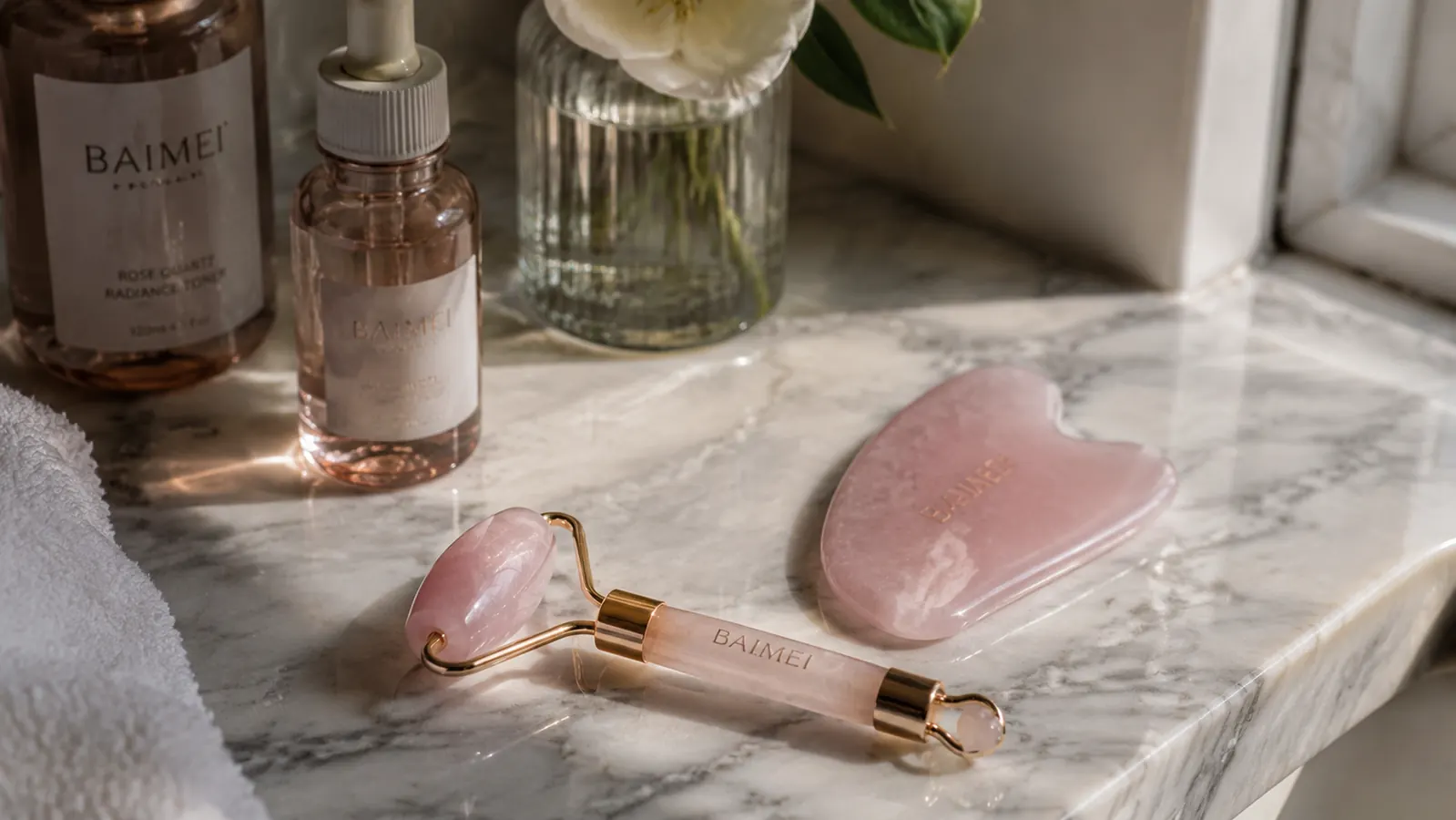
I have been a licensed esthetician for nine years. I have used gua sha tools in facials, recommended them to clients, and watched the BAIMEI set go from a niche find to a phenomenon with over 54,000 Amazon reviews. And because I keep getting asked the same question by clients who saw it on TikTok, I am going to give you the version nobody posts: what this $10 stone set actually does, where the hype outpaces reality, and the specific mistakes that will make it useless even if you use it every single morning.
The BAIMEI IcyMe Rose Quartz Roller and Gua Sha Set is a legitimate beginner tool. It is not a scam. But the videos showing chiseled jawlines and lifted cheekbones after two weeks of rolling are leaving out most of the story. Let me fill in the gaps.
The Quick Verdict
A solid entry-level set that delivers real but modest depuffing through lymphatic drainage, provided you learn correct technique and use a face oil underneath. Not a face slimming tool. Will break if dropped. Worth the price if you go in with realistic expectations.
Amazon Check Today's Price →Still want to try it? It is worth $10 if you go in with clear eyes.
The BAIMEI set has real value as a beginner lymphatic drainage tool. If you know what you are buying, it earns its spot in your morning routine.
Amazon Check Today's Price on Amazon →What Marketing Will Not Tell You
The Amazon listing calls this set a tool for depuffing and lymphatic massage. That framing is accurate. What it does not say, and what most influencer reviews skip, is this: everything that looks like a face-contouring result in those before-and-after videos is temporary lymphatic drainage. You are moving fluid. The minute you drink a glass of salty broth, sleep on your face, or skip a night of sleep, that puffiness returns. There is no permanent reshaping happening.
I am not saying the results are fake. I am saying they are functional, not structural. The difference matters because it tells you how to use the tool correctly. You are not sculpting bone. You are giving your lymphatic system a gentle assist at moving morning puffiness out of your face. That is a real, worthwhile thing. It just is not the jawline transformation TikTok implies.
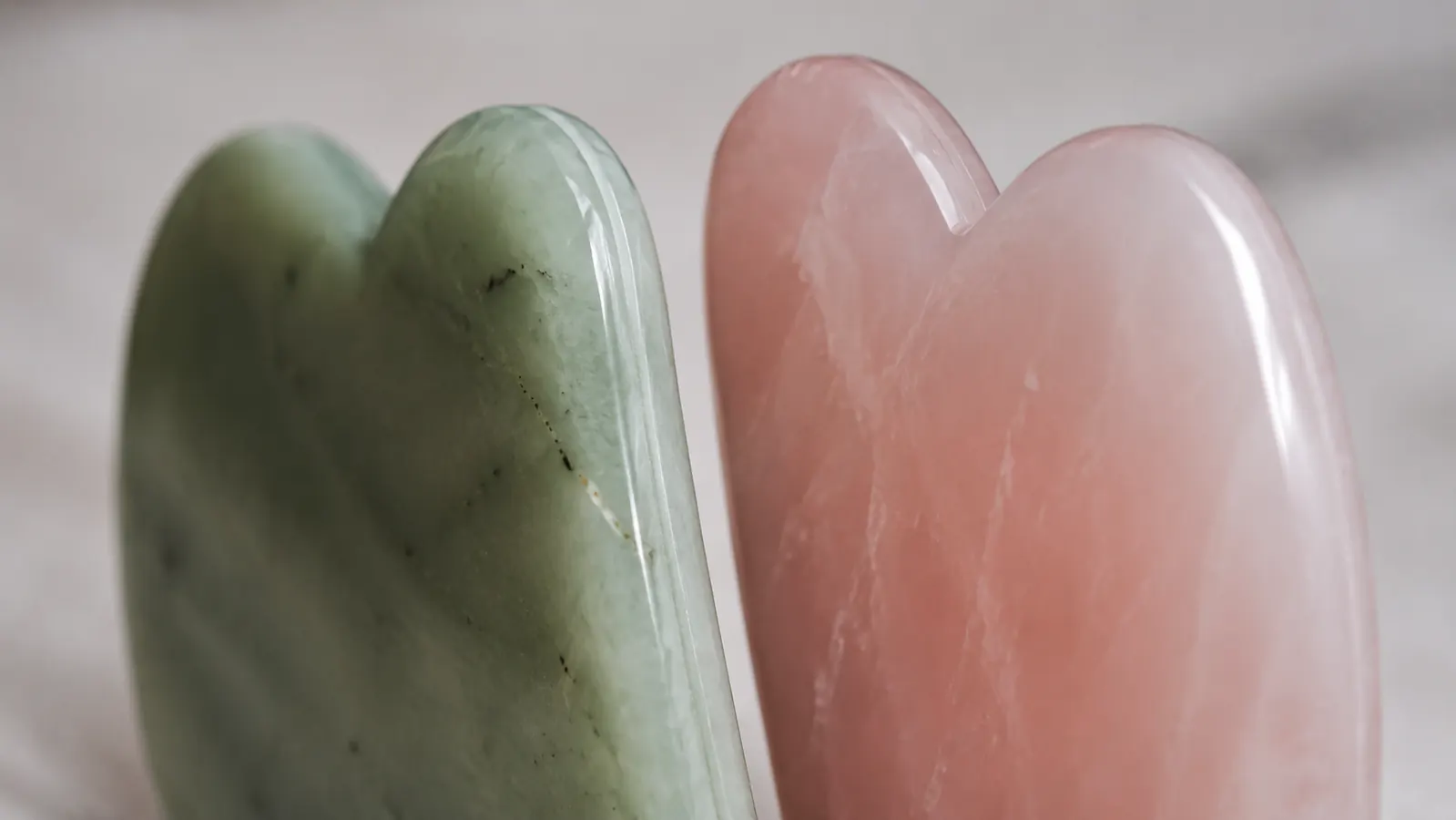
The other thing the listing glosses over: stone quality. BAIMEI uses mid-tier rose quartz. A meaningful percentage of units have visible mold seam lines along the edges. This does not make the tool dangerous, but it does mean the edge you are pressing to your face is not as smoothly polished as it looks in product photos. Higher-end sets from Mount Lai or Wildling use better stone sourcing and finishing. At $10, you are getting what you pay for on the material side.
The 'Face Slimming' Reality
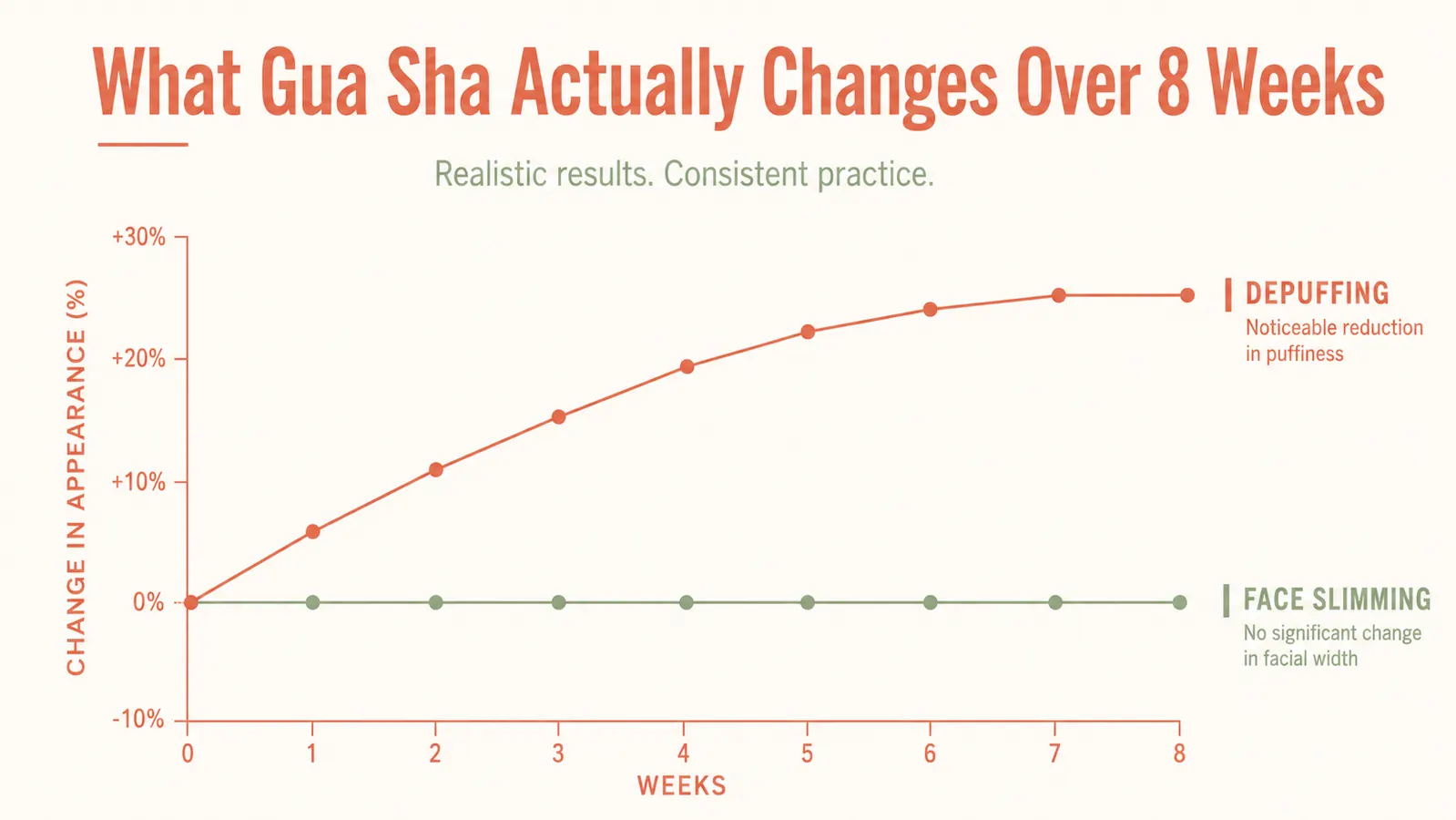
Let me be direct: gua sha does not slim your face. Not this set, not any set. The facial structure you are working with is bone, muscle, and fat tissue. A smooth stone dragged across your skin is not changing any of those. The depuffing effect from lymphatic drainage can make your face look more defined for a few hours, particularly in the morning when sleeping-related fluid retention is highest. That is the mechanism behind every 'before and after' you are seeing online.
Lymphatic drainage is a real physiological process. Your lymphatic system runs just under the skin and moves cellular waste fluid toward lymph nodes. Gentle pressure and direction from a gua sha stone can support that movement when done correctly. Over weeks of consistent use, some people report their faces look less habitually puffy because they are regularly clearing that fluid buildup rather than letting it sit. That is the honest long-game benefit.
You are not sculpting bone. You are helping your lymphatic system do its job. That is a real benefit. It is just a different benefit than what the videos show you.
If your main goal is actual face slimming, no skincare tool will get you there. Diet, body composition, and genetics drive facial structure. Gua sha is a circulation and drainage tool, not a body recomposition one. I want you to know this before you buy because disappointment is the biggest driver of abandonment, and if you expect the wrong result you will quit before you see the real one.
Technique Matters More Than the Tool
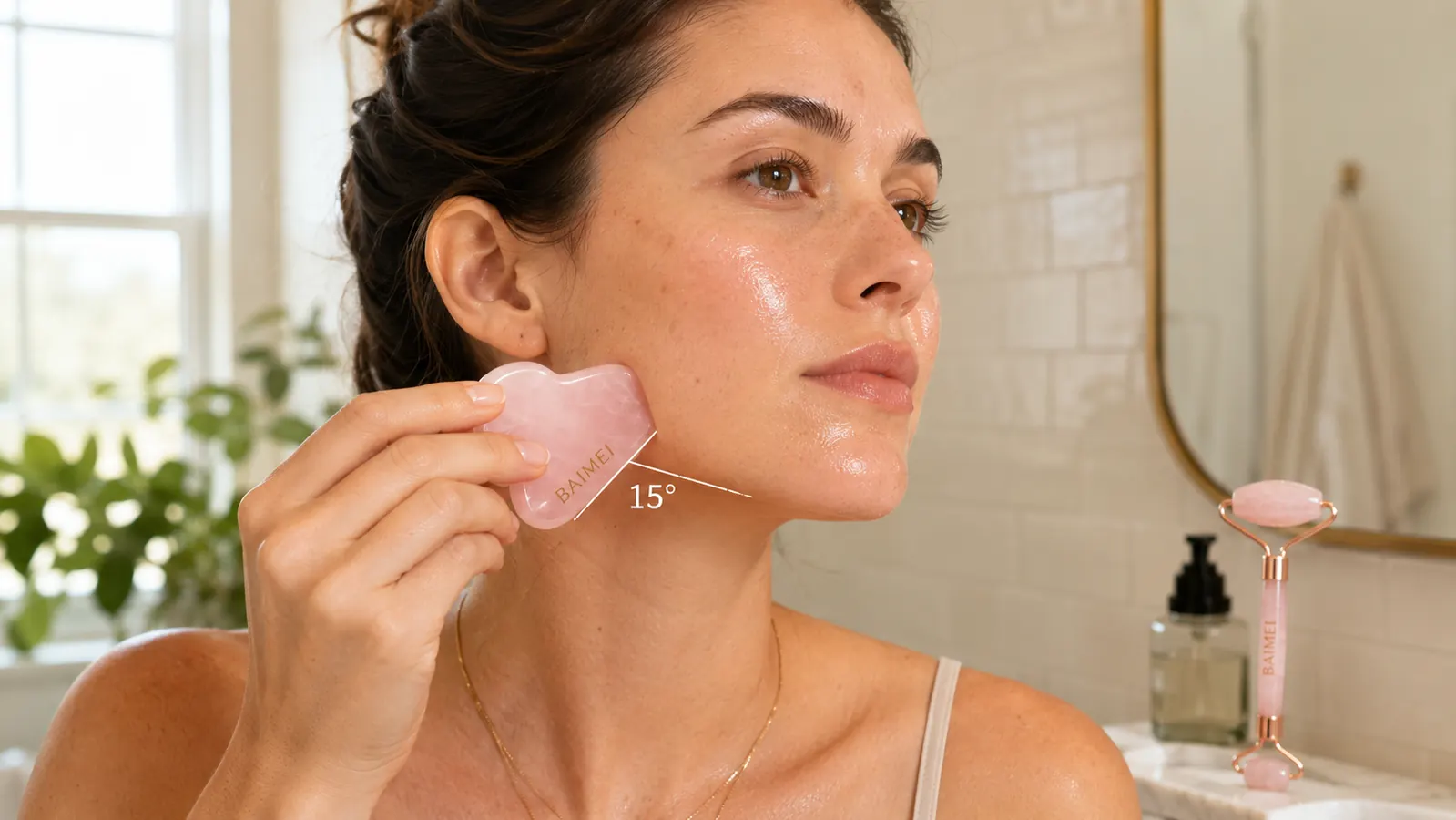
This is the part most reviews skip entirely. Gua sha done wrong does nothing. Gua sha done very wrong can cause bruising or micro-irritation. The technique required is specific: the stone should be held at roughly 15 degrees relative to the skin (nearly flat, not upright), strokes should go upward and outward toward the lymph nodes at the hairline and neck, and you need a slip layer underneath or you are dragging skin instead of gliding.
The slip layer is non-negotiable. A face oil, a serum with good glide, or even a facial cream all work. What does not work: nothing. I have seen clients try gua sha on dry or barely-moisturized skin, push too hard, and end up with red capillary marks on their cheeks. The stone is not at fault. The technique is. BAIMEI ships a tool. It does not ship a tutorial. You will need to learn the strokes before the tool has any value, and that learning curve is real.
The BAIMEI gua sha stone shape is a standard curved board. It works well for the neck, jawline, and cheekbones. The concave notch is designed for the jaw angle. The roller is most useful for undereye puffiness and the forehead. Neither piece is hard to learn with, but both require intentional practice before they do anything useful. Watch two or three dedicated technique videos before your first session, not the 15-second TikTok clips that skip the setup.
The Breakage Risk Nobody Mentions
Rose quartz is a natural stone. Natural stone shatters on hard surfaces. I have had two clients crack their BAIMEI stones by dropping them on bathroom tile. Both stones broke cleanly in half. This is not a defect. It is physics. A hard, smooth object dropped from counter height onto a hard floor will break.
The roller head is also worth noting. The metal frame holding the rose quartz roller barrel is adequate but not premium. A few client reports and Amazon reviews mention the barrel loosening after several months of daily use. It does not fall out, but it develops a slight wobble that changes the feel of the roll. At $9.99, this is proportional to the price point. But if durability matters to you, the investment step up to Mount Lai or Wildling is meaningful and justified.
Practical advice: keep the stone in the small pouch it ships in when it is not in use, and set it down on a soft surface instead of placing it on tile or marble. Those two habits will extend the life of this set significantly.
Better Alternatives If Budget Allows
Mount Lai's rose quartz gua sha runs about $42 and the stone quality is noticeably better. The edges are polished and even, with no mold seam lines. The shape is similar to BAIMEI's but the stone feels denser and more substantial in hand. It also comes with a well-produced technique guide. If you already know you are going to stick with gua sha as a regular practice, the Mount Lai is a worthwhile upgrade.
Wildling makes a jade gua sha at the higher end of the market, around $85 to $95. It is well-made and the brand invests heavily in education. I do not recommend it as a first purchase. Learn the technique on a cheaper tool first. If you are still using it consistently after three months, then consider an upgrade.
For most people testing gua sha for the first time, BAIMEI is a perfectly rational starting point. The tool itself does not determine results as much as technique and consistency do. Spending $42 on a first gua sha stone you are not sure you will use is harder to justify than spending $10 and figuring out whether the practice suits you.
What I Liked
- Under $10 for a two-piece set, accessible entry point for beginners
- Delivers real depuffing and lymphatic drainage results when technique is correct
- Roller works well for undereye puffiness and forehead tension
- Stone stays cool naturally, which helps with morning puffiness
- Ships with a small drawstring pouch for storage
Where It Falls Short
- Mid-tier stone quality: some units have visible mold seam lines on edges
- No included technique guide, leaving most buyers to learn from unreliable social content
- Rose quartz will shatter if dropped on hard tile or marble
- Roller barrel can develop slight looseness after months of heavy daily use
- No benefit without a face oil or serum underneath, which is never mentioned in marketing
Who This Is For
You are the right person for this set if you wake up with regular facial puffiness, have good skin hydration and a face oil in your routine already, and are willing to spend ten or fifteen minutes learning proper technique before expecting results. Lymphatic drainage through gua sha is genuinely effective at moving morning fluid retention, and the BAIMEI set gives you a functional tool to do it without committing much money. It is also a good fit if you carry jaw or neck tension and want a physical way to address it in the morning.
People who tend to get the most out of this set are in their late 20s through their 40s, have normal to dry or combination skin, and already have some kind of oil or serum in their routine that can double as a slip layer. The tool adds to a routine that already has basics in place. It is not a foundation-of-skincare purchase.
Who Should Skip It
If you have rosacea, do not use a gua sha stone on your face. The friction and pressure, even with good technique, can trigger flushing and worsen redness. The same applies if you have active acne or open breakouts. Dragging a stone across inflamed skin spreads bacteria and can rupture pimples you did not even feel. Wait until breakouts have fully healed before adding any mechanical facial tool to your routine.
If you have very sensitive or reactive skin that reddens easily from any kind of friction, a gua sha stone is not a good fit regardless of technique. The gentler version of lymphatic drainage for reactive skin types is a cold cloth compress, which provides the drainage benefit without any friction. Skip the stone if your skin goes red from a washcloth. Skip it too if you are not willing to invest fifteen to twenty minutes learning correct form. Used without proper technique, this does nothing useful.
Bottom Line
The BAIMEI gua sha set is a reasonable $10 purchase for someone willing to learn the technique, already has a face oil or serum in their routine, and understands they are buying a depuffing tool, not a facial remodeling device. The stone quality is mid-tier, the roller barrel is functional but not built to last years of daily use, and the breakage risk on hard bathroom floors is real and unmentioned. None of those are dealbreakers at the price point.
What will kill your results every time, regardless of which gua sha stone you buy, is bad technique or no slip layer. Fix those first. The BAIMEI set is good enough to show you whether this practice actually works for your face before you spend $42 to $90 on a premium stone. That is exactly the role it should play in your skincare journey. If you are still using it consistently at the three-month mark, you will know whether an upgrade makes sense.
Ready to try gua sha with clear expectations? The BAIMEI set is still the right starting point.
At this price, the downside is low. Learn the technique, use it with a face oil, and give it four weeks before judging. That is the honest way to try this.
Amazon Check Today's Price on Amazon →